
Updated on 13 October 2026: facts checked against Swedish cultural-heritage and food-science sources, with new sections on how surströmming is made, the August premiere and what it tastes like. First published in September 2010.
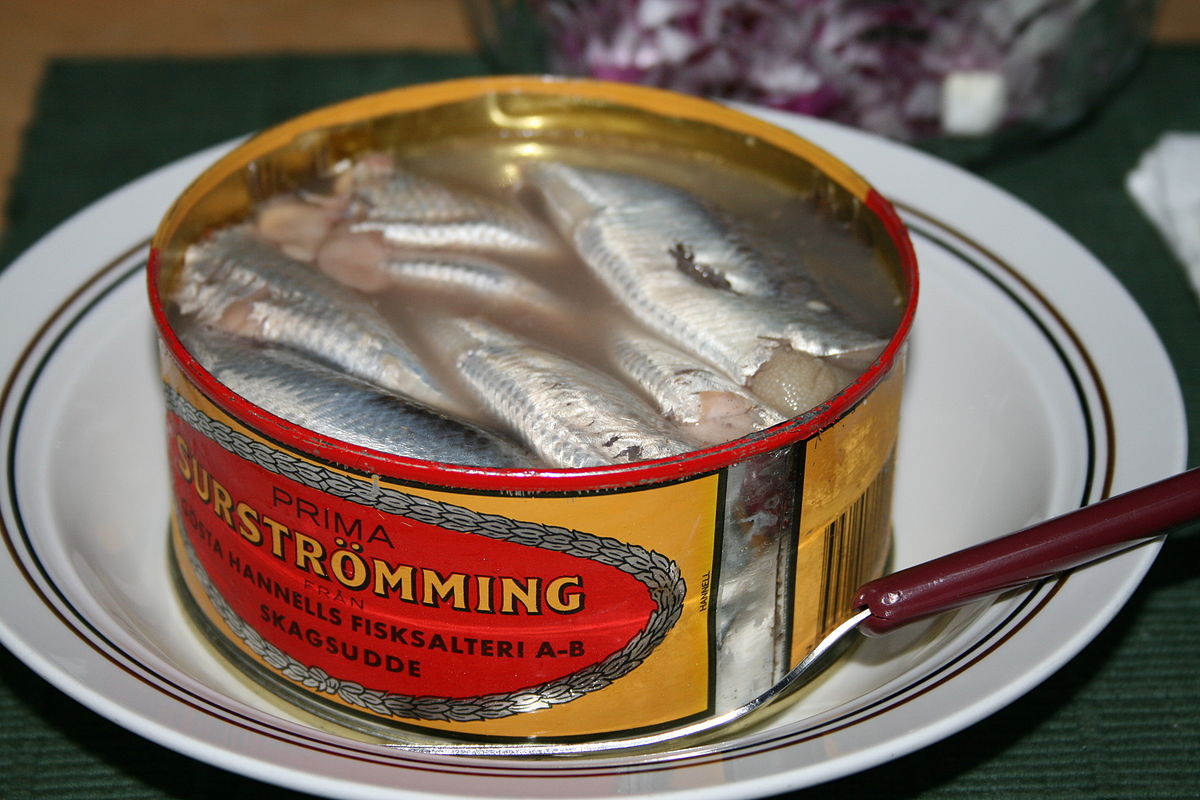
Surströmming is Baltic herring that is lightly salted and left to ferment, then sealed in tins where it keeps fermenting. It is famous for one of the strongest smells in the food world, but in Sweden it is a well-loved seasonal tradition, eaten at late-summer gatherings with flatbread, potatoes and onion.
At a glance
- What it is: fermented (soured) Baltic herring, sold in tins.
- Where it’s eaten: across Sweden, most strongly associated with the northern coast, where most producers are.
- Why it’s unusual: the fish keeps fermenting inside the sealed tin, so the cans bulge and release a powerful smell when opened.
How surströmming is made
The herring is caught in spring, just before spawning. According to Nordiska museet, the cleaned fish first spends about two days in strong brine, then ferments for six to eight weeks in barrels with a weaker brine. In early July it is packed into tins.
Fermentation doesn’t stop there. Salt-tolerant bacteria keep working inside the can and produce gas, which is why the tins slowly bulge. A food-science review in the Journal of Ethnic Foods notes that the brine’s salt content keeps out the bacteria that make fish rot, so surströmming is fermented, not rotten.
Why it smells so strong
The famous odour comes from the compounds formed during fermentation: propionic acid (pungent), butyric acid (rancid butter), acetic acid (vinegar) and hydrogen sulfide (rotten egg), as described in the same review. A 2020 study in Food Microbiology also found large amounts of trimethylamine and sulfur compounds in tins from three Swedish producers.
That’s why tins are traditionally opened outdoors, often under water or in a bucket, and the brine is drained before the fish is served.
The surströmming premiere
Since 1940 the season has opened on the third Thursday of August, the surströmmingspremiär. The date was set to stop under-fermented herring from being sold, and it was required by law until 1988 (Levande kulturarv, the Swedish Institute for Language and Folklore’s register of living heritage). Today producers keep the date themselves, and late August to early September is the classic time for a surströmming party (Visit Sweden).
How Swedes eat it
Surströmming is usually rolled in thin flatbread (tunnbröd) or eaten on crispbread with boiled potatoes, chopped onion and sour cream or gräddfil, sometimes with a glass of snaps (Nordiska museet). It is a meal for company, eaten outside in late summer.
What does it taste like?
We tasted it: not yet. UglyFood hasn’t done a first-hand tasting for this article, so everything below is reported.
What others report: fans say the flavour is milder than the smell: salty, sour and fishy, with a soft texture, and best balanced by the bread, potatoes and onion. Swedish sources note that real enthusiasts prefer the previous year’s tins, when the herring is fully matured and tender (sweden.se, archived).
From the 2010 original
“Surströmming is considered one of the world’s most revolting foods due to its strong odor, which can be overpowering even to those who are used to eating fermented foods. Despite this, surströmming is a beloved food in Sweden, where it is considered a traditional dish and a symbol of Swedish culture.”
Read next
- Weird Eats – Casu marzu, Sardinia’s maggot cheese
- Weird Eats – Smelly durian fruit
- Weird Eats – Jellied moose nose
- Food Crimes – A surprise in a herring can
More fermented, smelly and acquired tastes in Weird Eats.
Sources
- Nordiska museet – Surströmming
- Levande kulturarv (Institutet för språk och folkminnen) – Surströmming
- Visit Sweden – Surströmming
- Skåra et al., “Fermented and ripened fish products in the northern European countries”, Journal of Ethnic Foods (2015)
- Belleggia et al., “Discovering microbiota and volatile compounds of surströmming”, Food Microbiology (2020)